
A home workout for women that fits in 25 minutes: a weekly no equipment plan, moves for each day, and how to progress without weights.
25 November 2026
A good home workout for women doesn't need dumbbells, a gym membership or a free hour. You need a mat, about 25 minutes and a plan that tells you exactly what to do on Monday. Below is a full week of no equipment workouts, the moves for each day, and a simple way to make them harder as you get stronger.
Your own body weight is plenty of load when you're starting out. Squats, lunges, glute bridges, push-ups against the sofa: if you haven't trained in a while, your legs and arms will notice by the end of the first session.
Bodyweight training won't build big muscles fast. Most women don't want that anyway. They want to feel stronger, stand taller, take the stairs without stopping halfway, and see their body get firmer over a couple of months. A steady workout at home for beginners covers all of that.
So why do so many people quit by week two? Laziness is rarely the reason. Usually it's one of these:
A written plan fixes most of this. You know what Monday looks like, the load goes up slowly, and strength days take turns with stretching and rest.
One trick from the studio: tie your workout to something you already do every day. Right after your morning coffee, say, or before your evening shower. Leave the mat out where you can see it. The fewer steps between "I should" and your first squat, the fewer sessions you'll skip.
Three strength days, two easier mobility days, two days off. Muscles get stronger while you recover, so training hard every day actually slows you down.
Missed a day? Don't restart the week out of guilt. Do the next session on the list and keep going.
Warm up for 5 minutes before every strength day: shoulder circles, side bends, 30 seconds of high-knee marching, and 10 slow half squats.
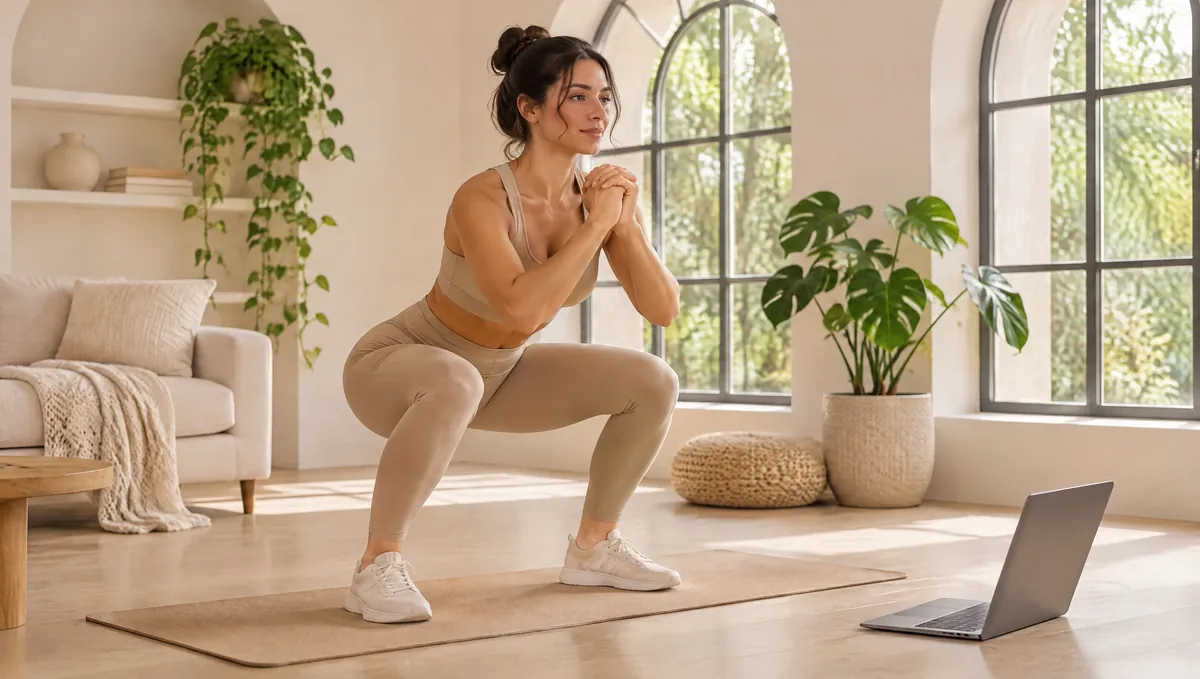
Monday: legs and glutes. 3 rounds, one minute of rest between rounds.
Wednesday: upper body and core. 3 rounds.
In the plank, your body is one straight line from head to heels. Hips don't sag and don't stick up. If the line breaks at 25 seconds, hold for 20 and keep it straight.
Friday: full body circuit. 40 seconds of work, 20 seconds of rest, 4 rounds.
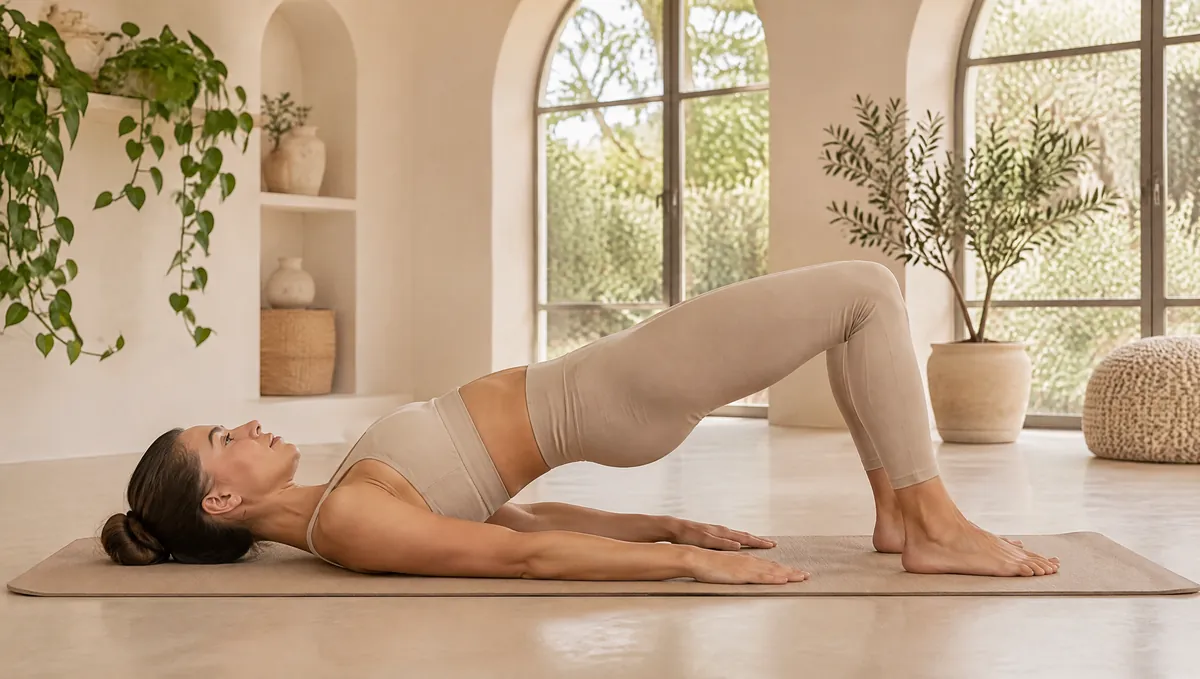
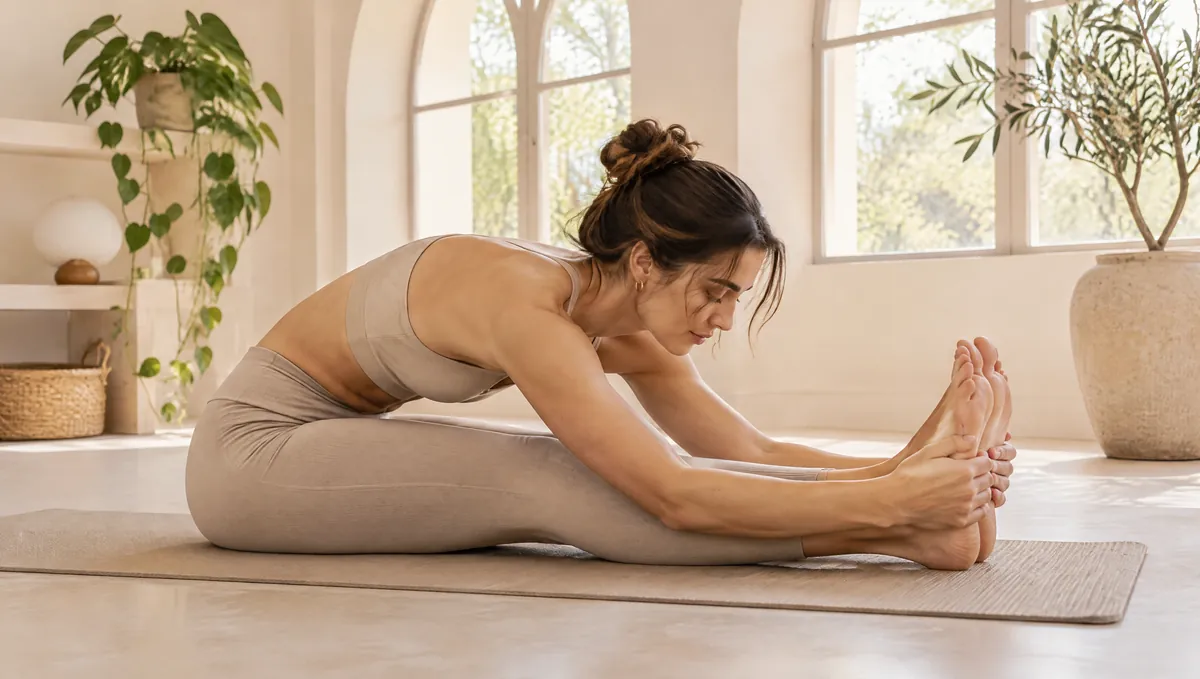
After each strength day, spend 5-7 minutes stretching your legs and back. Here's why it's worth doing straight away: stretching after a workout.
Week one should feel almost too easy. If you're walking down the stairs sideways afterwards, you overdid it.
After a month, lower the surface for your push-ups, go up to 4 rounds, or add a jump to your squats if your knees are happy with it.
How do you know it's working? Not by the scale. Look for small things: a plank that shook at 20 seconds now holds for 40, squats feel steady on both legs, and you're tired after a session but fine the next day. Write your reps in your phone notes and check the first entry after a month.
A home workout helps, but it can't do the job alone. Food and sleep move the scale more than any routine. Strength work keeps your muscle while you lose fat, so your body gets firmer as the weight comes off. Some women see a change in the mirror after a month, others after three. Both are normal.
What helps most:
If you have back or knee pain, a health condition, or you're pregnant or recently gave birth, check with your doctor first. For life after a baby, read our guide to stretching after childbirth.
Would you rather follow a ready-made program from a coach than build one yourself? Anna Kanyuk, founder of TOPSTRETCHING® and a master of sport in rhythmic gymnastics, is preparing FULL BODY, an online course for beginners. The courses are coming soon: leave your email on the courses page and you'll be the first to know when they open.
Start with 3 strength sessions of 25-30 minutes plus 1-2 stretching days. Leave at least one rest day between strength days.
Yes. Bridges, lunges and slow squats give your glutes plenty of work. When they feel easy, slow the tempo and add reps.
25-30 minutes including the warm-up is enough. Three short sessions a week beat one long workout at the weekend.
For the first few months, yes. Body weight, tempo and more rounds give you enough progression before you need any weights.
Most people find the exercises easier after 3-4 weeks. Visible changes come later and look different for everyone.
Stretching, FULL BODY, facebuilding, TOP MAMA from anywhere in the world. Leave your email and be the first to get access.
Get notified →