
Stretching for beginners at home: what you need, an easy 15-minute routine, a simple 4-week plan and the mistakes that make people quit.
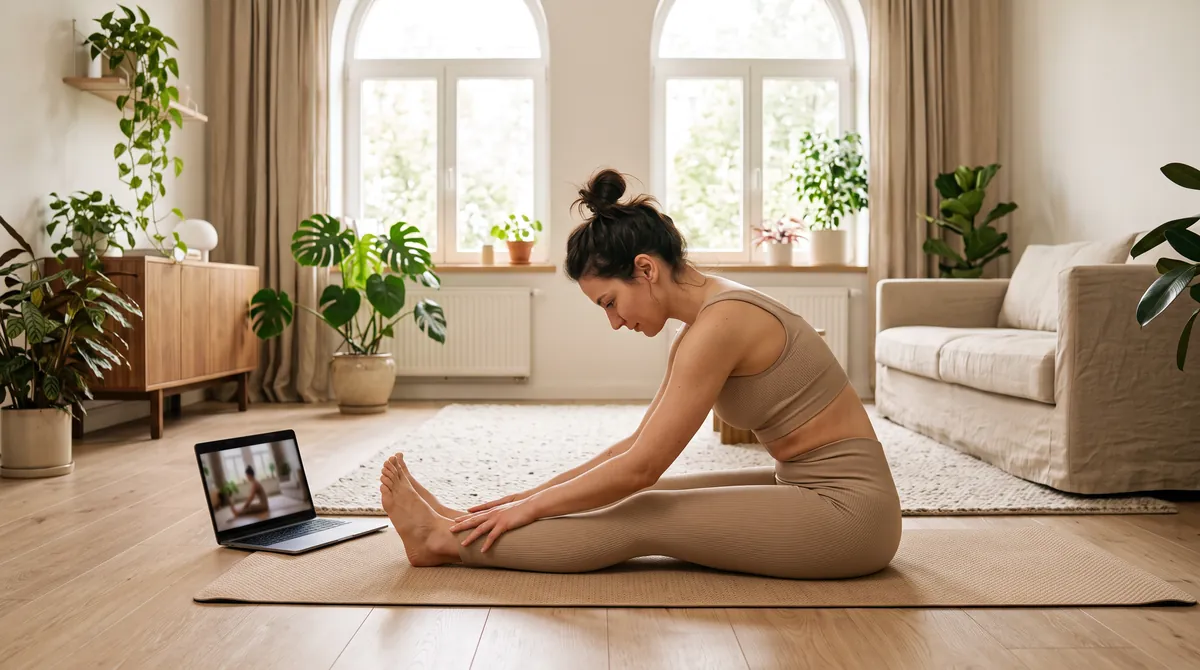
13 November 2026
Stretching for beginners doesn't need a studio, a split goal or an hour a day. It needs a mat, fifteen minutes and a plan simple enough that you actually stick to it. Here's where to start at home, what to do in your first month and the mistakes that make beginners quit by week two.
When you're new, the hardest part isn't the stretch. It's showing up. At home there's no commute, no class time to match and nobody watching you wobble in a lunge.
And beginners don't need much. Your body responds to regular, gentle work far more than to one heroic session a week. Ten to fifteen minutes, four or five times a week, beats one painful hour on Sunday.
What changes first is usually not the split. It's the small stuff:
In our studios we say stretching is more than splits, because it changes how you move, sit and feel in your body. The splits can come later, if you want them.
You need almost nothing.
Pick one spot in your home and leave the mat there if you can. When the mat is already out, starting takes five seconds instead of five excuses.
One safety note. If you have back pain, a recent injury, or you're pregnant or recently gave birth, check with your doctor first. Stretching helps a lot of people, but it's not a replacement for treatment.
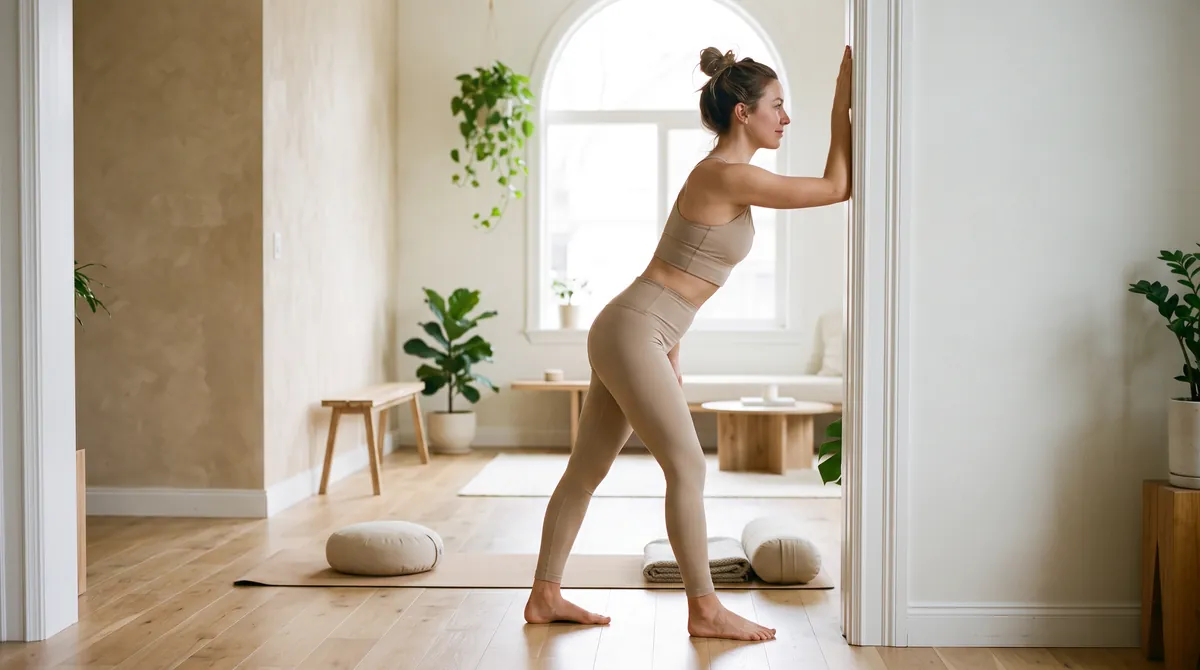
This beginner stretching routine covers the areas that get tight from sitting: hips, hamstrings, back, chest and neck. Hold each stretch for 30 to 45 seconds, breathe slowly through your nose and stay at a 5 or 6 out of 10 on the tension scale. A stretch should feel like a strong pull, never a sharp pain.
Warm-up, 2 minutes. March on the spot, roll your shoulders, swing your arms, do a few slow squats. Warm muscles stretch easier and safer.
That's about 15 minutes. If you want a longer head-to-toe version later, try our 20-minute full body stretching routine.
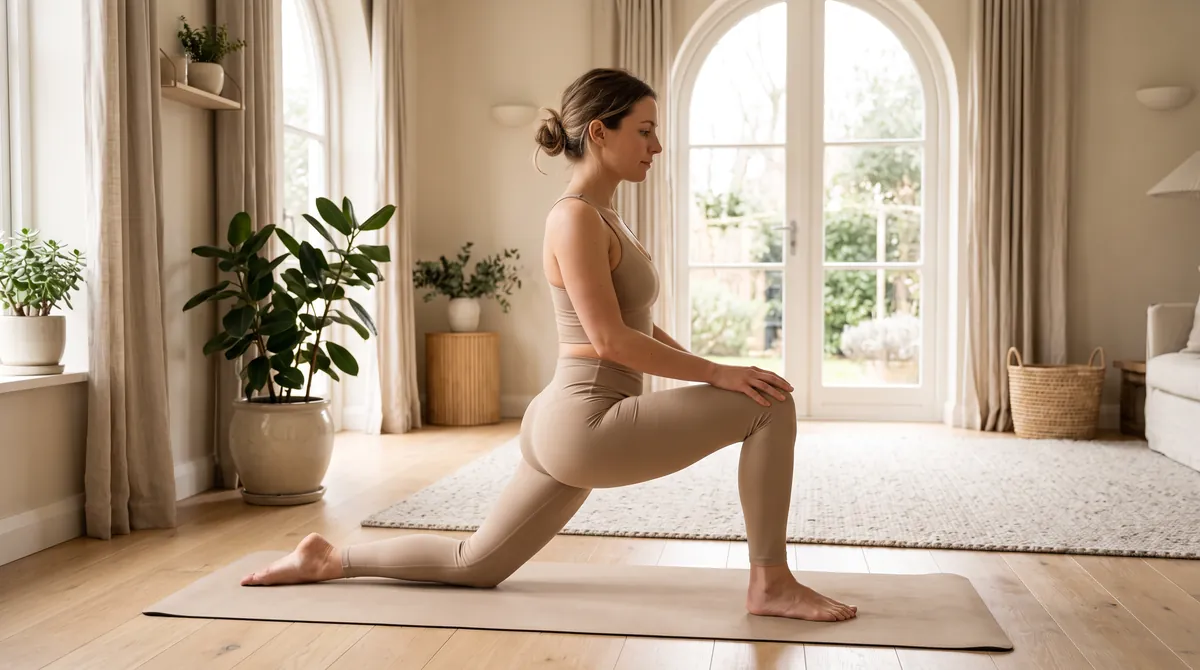
Stretching at home works when it's boring and regular. Here's a plan you can copy.
Week 1: learn the moves. 3 sessions of 10 minutes. Do 6 of the 10 stretches. Focus on breathing and not forcing anything.
Week 2: build the habit. 4 sessions of 15 minutes. Add the rest of the routine. Same time of day if you can: morning coffee or right before bed.
Week 3: hold longer. 4 to 5 sessions. Hold your tightest areas (usually hamstrings and hips) for 60 seconds instead of 30.
Week 4: check your progress. Take a photo of your forward fold and your lunge on day 1 and again on day 28. Same angle, same spot. The change is rarely huge, but most beginners can see it and are surprised.
Morning or evening? Pick whatever fits your day. In the morning you'll feel stiffer, but a short session wakes up a "wooden" back. In the evening muscles are warmer and calmer stretching helps you wind down. Keeping the same time each day makes the habit stick faster.
Missed a day or two? That's fine. Don't double up to catch up, just go back to the plan next time.
A quick tip for checking progress: measure, don't guess. In our method we track range in numbers, like how many centimeters your fingertips are from the floor. A ruler and your phone are enough at home.
Bouncing. Pulsing in and out of a stretch makes the muscle tighten to protect itself. Ease in and stay.
Holding your breath. If you can't breathe calmly, you've gone too deep. Back off a little.
Stretching cold. Do two minutes of movement first, every time.
Chasing pain. "No pain, no gain" doesn't apply here. Sharp, burning or joint pain means stop.
Rounding your back to reach further. In forward folds, a flat back with bent knees does more for your hamstrings than touching your toes with a hunched spine.
Doing it once a week. Flexibility fades fast. Short and often wins.
Skipping strength. Flexible but weak joints are unstable. Simple moves like squats, glute bridges and side-lying leg lifts help your body trust the new range.
A routine from an article will get you started. But after a month, most beginners hit the same questions. Am I doing this right? Why is my left side tighter? What's next?
That's where guided practice helps. A good program tells you what to do on each day, shows the technique on video and moves you forward step by step, so you don't plateau or overdo it.
We're preparing online courses by Anna Kanyuk, the founder of TOPSTRETCHING® and a master of sport in rhythmic gymnastics. FULL BODY is the one built for beginners: a step-by-step system for flexibility, posture and strength at home. The courses are opening soon. Leave your email on the courses page and we'll let you know first.
You can also see what else we do online, from the TOPCLUB community to 3-6 week marathons with curators, on our online page. And if a split is your long-term goal, here's how to do the splits safely, with a 30-day plan.
Aim for 4 to 5 short sessions a week, 10 to 15 minutes each. Regular short sessions work better than one long one.
Start with 30 to 45 seconds. For your tightest areas, build up to 60 seconds after a couple of weeks.
Yes, gentle stretching every day is fine for most people. Keep the tension moderate and take a rest day if you feel sore.
Most beginners notice they move more easily within 2 to 4 weeks. Bigger changes in range take a few months of regular practice.
No. You should feel a strong but tolerable pull. Sharp or joint pain means you've gone too far, so back off.
No. A mat, a cushion or towel and a wall are enough to start.
Stretching, FULL BODY, facebuilding, TOP MAMA from anywhere in the world. Leave your email and be the first to get access.
Get notified →