
Middle splits for beginners: what really holds your hips back, 6 middle splits stretches and an 8-week plan that keeps your knees safe.

26 October 2026
Middle splits are the ones most adults quietly give up on. You slide into a wide straddle, your feet get about a foot further apart, and then your inner thighs start shouting. I see it every week in class, and it's rarely about genes. Usually the knees are rolling forward, the muscles are cold, or someone is pushing way too hard.
This guide covers how to do middle splits without wrecking your knees: what's actually limiting you, six middle splits stretches that work, an 8-week plan and the mistakes that keep people stuck.
Middle splits, also called side splits or straddle splits, take both legs out to the sides while your pelvis stays put. That's hip work, not "stretchy legs".
Three things usually get in the way:
Then there's your nervous system. A muscle lets you go as far as your body feels safe. Slow breathing and steady practice push that limit out. Bouncing and forcing pull it in, because the muscle tightens to protect itself.
If you're also working on front splits, read our front splits guide. Different muscles lead there, so progress in one doesn't promise progress in the other.
Got a knee or hip injury, or lower back pain? Check with a doctor first. The same goes if you're pregnant or have recently given birth. Stretching doesn't replace treatment.
Do them in this order, from gentle to deep.
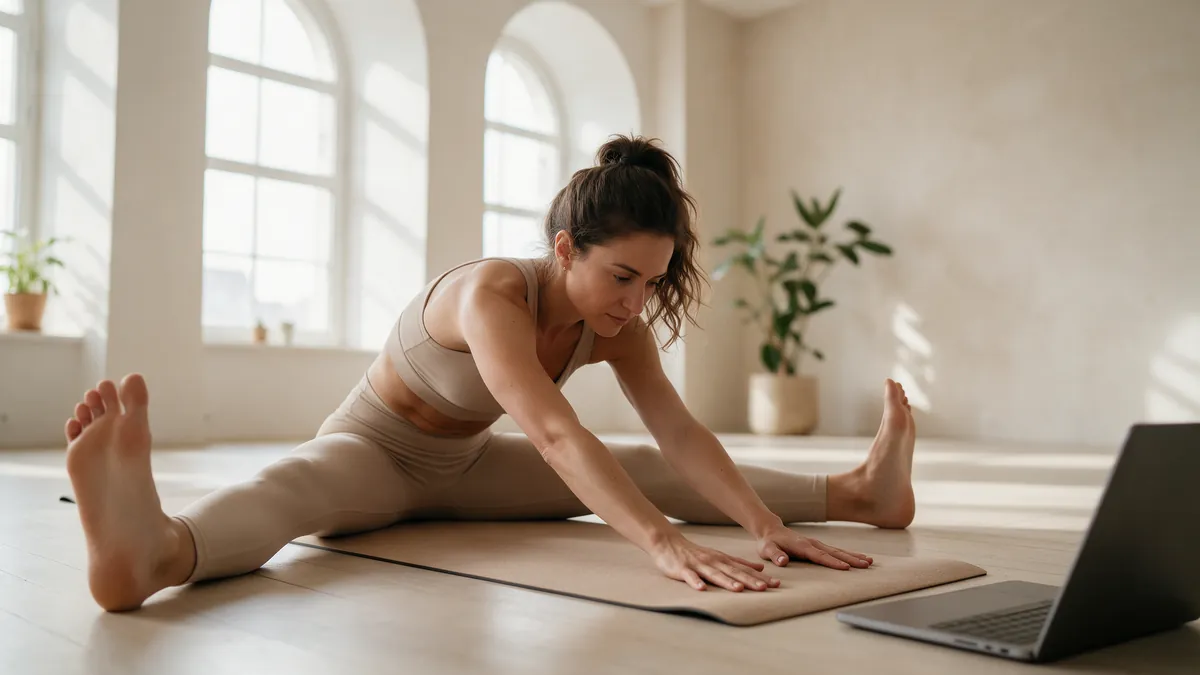
Don't skip strength. Inner thighs open more easily when they're strong, not just long. Sumo squats and side lunges twice a week make your straddle steadier and your knees calmer.
Flexibility rewards consistency over heroics. Four 20-25 minute sessions beat one 90-minute marathon.
A sample week: Monday, Wednesday, Friday and Saturday for full sessions. Tuesday and Thursday for 5-10 minutes of easy mobility. Sunday off.
Eight weeks in, most beginners still aren't flat on the floor, and that's normal. For adults, side splits usually take anywhere from a few months to a year. Trust the tape measure, not the mirror.
Want the bigger picture plus a 30-day plan for every type of split? Our beginner's guide to the splits has it.

The hardest part is sticking with the plan, especially after a missed day or when you're not sure your form is right. At TOPSTRETCHING® studios, progress is measured in numbers, not by eye: coaches track your range of motion and take you step by step from zero to splits. Many of our coaches are masters of sport in rhythmic gymnastics, and the method grew out of gymnastics, ballet and Pilates.
You can follow the same approach at home. Take the short quiz and the app will build your plan from Anna's courses. Anna Kanyuk is a master of sport in rhythmic gymnastics and the brand's co-founder.
Why does that help with middle splits? Week three is where most people drift: the first excitement is gone, the floor still looks far away, and a homemade routine starts to feel random. A step-by-step plan tells you what to do today and what comes next, and it mixes flexibility with strength and posture, which is exactly what a straddle needs. You stop guessing and just show up.
If you like group challenges, you can also read about our splits marathons on the online page.
Most adults need a few months to a year with 3-4 sessions a week. Hip structure, age and how often you train all play a part.
Yes. Many adults get there or close to it. It takes longer, so warm-ups, consistency and strength work matter more.
For most adults, yes, because they depend more on hip shape. Some people find it the other way round.
Usually your knees are rolling forward and the load shifts into the ligaments. Point your knees and toes to the ceiling. If it still hurts, stop and see a doctor.
60-90 seconds in most positions and 2-3 minutes in the wall straddle. Longer isn't better if you're tensing up.
Answer 6 questions and the app builds a 4-week plan from Anna's courses: stretching, FULL BODY, facebuilding, TOP MAMA.
Get my plan →