
How to improve flexibility without forcing it: why your body resists, 7 flexibility exercises for home, a 4-week plan and the mistakes to avoid.
27 November 2026
If you want to know how to improve flexibility, here's the short answer: stretch 4-5 times a week for 15-20 minutes, hold each position longer than feels natural, and stay patient for at least a month. Below are the details that make it work: why your body resists, which flexibility exercises to do, a four-week plan, and the mistakes that keep people stuck.
Flexibility is the range a joint can move through without pain. Three things set that range: how long your muscles are, how mobile your joints are, and how much your nervous system trusts the position.
That last one surprises people. Your muscle can often lengthen further than you think. But your brain hits the brakes early to protect you. So most progress in the first weeks comes from your nervous system getting used to a new range, not from muscles physically growing longer.
That's why forcing a stretch backfires. Bounce or push through sharp pain, and your brain tightens the muscle even more. Calm breathing and regular practice tell it the position is safe.
There are also two kinds of flexibility:
Active flexibility is the one you use in real life. It protects your joints and makes movement look and feel controlled. That's why the TOPSTRETCHING® method always pairs stretching with strength, posture and breathing work.
Warm up first. Cold muscles don't want to stretch. Five minutes is enough: march in place, roll your shoulders and hips, do a few squats and easy leg swings.
Hold static stretches for 30-60 seconds. The first 15 seconds your body is just settling in. The useful part comes after.
Use a 1-10 intensity scale and stay around 6. You should feel a strong pull, but you can still breathe slowly and talk. If you're holding your breath or gritting your teeth, back off an inch.
Go deeper on the exhale. Hold on the inhale. On the exhale, soften and sink a little lower. No bouncing.
Frequency beats duration. Fifteen minutes five times a week will take you further than one 90-minute session on Sunday. Flexibility training is like brushing your teeth: small and often.
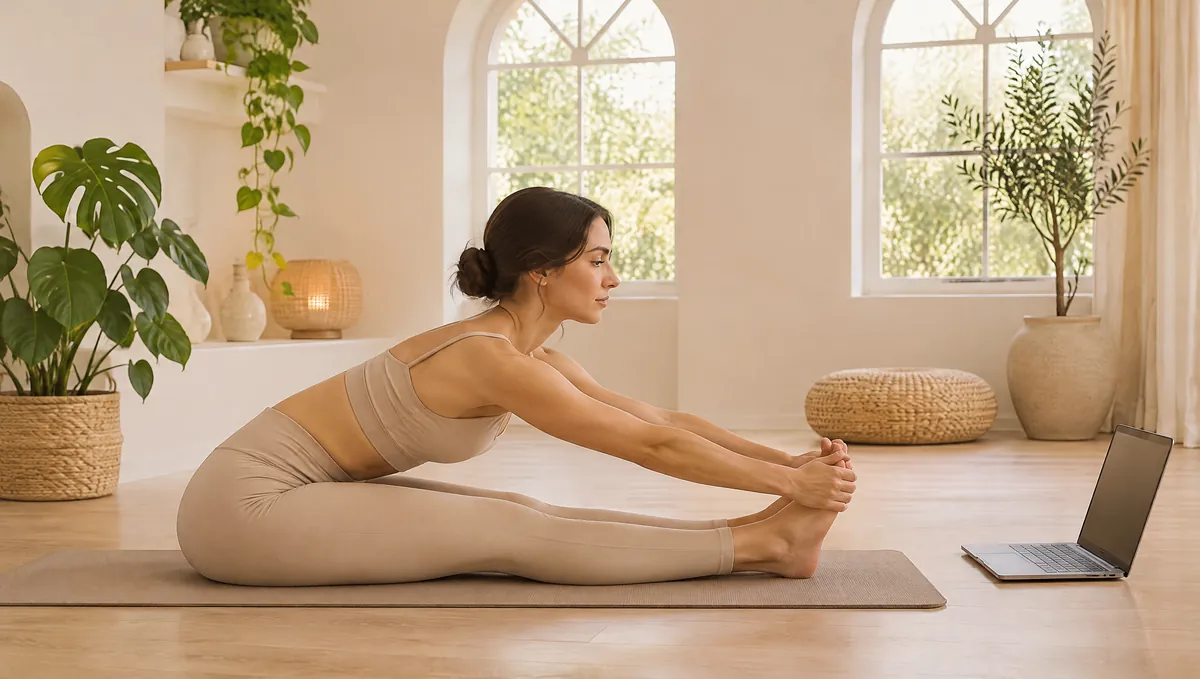
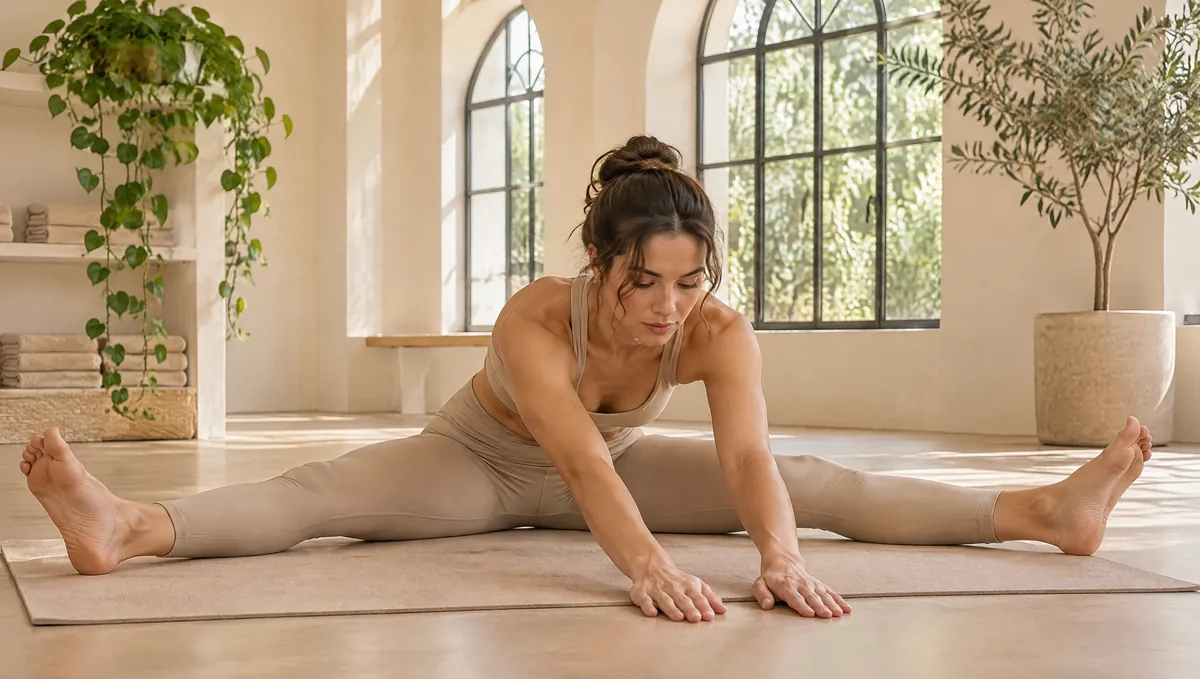
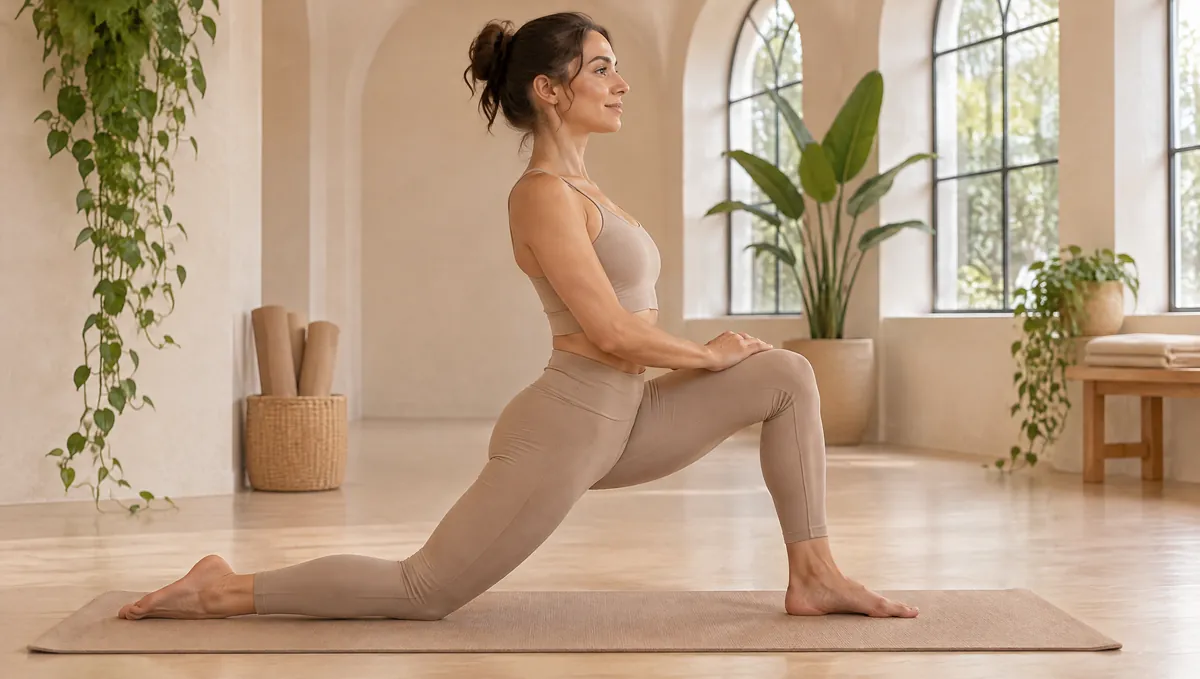
This set covers the areas most people need: hamstrings, hips, spine and shoulders. All you need is a mat.
The last one builds active flexibility, and most home routines skip it. If you'd rather follow a full sequence, try this 20-minute full body stretching routine.
Write down three numbers on day one (more on that below). Then follow this:
Week 1: learn the moves. 4 sessions of 15 minutes. Hold each stretch for 30 seconds. Your only job is to learn the exercises and find what a "6 out of 10" feels like for you.
Week 2: hold longer. 4-5 sessions of 15-20 minutes. Hold each stretch for 45 seconds. Add the active leg raise.
Week 3: add contract-relax. 5 sessions. Hold for 60 seconds. In the forward fold, press your heels into the floor for 5 seconds as if you're trying to bend your knees. Then relax and sink deeper on the exhale. This trick tells your nervous system it can let go.
Week 4: check your numbers. 5 sessions of 20 minutes. At the end of the week, repeat your day-one tests.
In our method, range of motion is measured in numbers, not judged by eye. You can do the same at home:
After a month, most beginners see their fingertips get a few centimeters closer to the floor. Some move faster, some slower. Both are normal. Compare yourself with you a month ago, not with someone else's timeline.
You don't need the splits to benefit from better flexibility. Picking things up off the floor, sitting cross-legged without your knees complaining, turning to check your blind spot: all of that gets easier. We cover the long-term side in our article on stretching for longevity. And if the splits are the goal, start with our beginner's guide to the splits.
You can absolutely do this alone. A coach just makes it faster, because they see the things you can't: a hip rolling out, a back rounding, a stretch that's working the wrong muscle. Anna Kanyuk, founder of TOPSTRETCHING® and a master of sport in rhythmic gymnastics, is preparing online courses, including FULL BODY for beginners. The courses open soon: leave your email on the courses page and we'll let you know first. In the meantime, see the other online formats from the brand.
Most people notice a difference after 3-4 weeks of stretching 4-5 times a week for 15-20 minutes. Bigger goals like the splits usually take several months.
For static stretching, 30-60 seconds per position. Beginners can start with 30 seconds and build up.
Yes. Flexibility improves at any age, just more slowly. Consistency and a proper warm-up matter more than age.
Gentle stretching every day is fine for most people. If you feel sore after a session, take a rest day or go lighter.
Seated forward fold, low lunge, butterfly, wide-leg fold, child's pose, cat-cow and an active leg raise. Together they cover hamstrings, hips, spine and shoulders.
Stretching, FULL BODY, facebuilding, TOP MAMA from anywhere in the world. Leave your email and be the first to get access.
Get notified →